
Knowledge base
- Chronological timeline from design to present
- All Jieldé models in a row
- The labels
- The “Loft” compared to the small “Signal”
- Technical drawings
- Workshop lamp
This page is continuously being updated with new information.
Chronological timeline of the Jieldé lamp: from “La Standard” to the current collection
1940–1949 | The problem arises
- Jean-Louis Domecq (1920–1983), a mechanic and workshop manager in the Lyon region, is looking for a robust work lamp for his machinery.
- The existing lamps are insufficiently adjustable, cables break in the hinges, and the structures are not suitable for heavy industrial use.
- Domecq begins developing sketches and prototypes for a completely new work lamp.
1950 | Design of “La Standard”
- The final design is being finalized.
- Domecq is developing a revolutionary electrical conduction system with copper contact rings in the joints, eliminating the need for visible wiring in the hinges.
- The lamp will have a fully rotatable, modular arm system and a heavy metal construction.
- This model will later be known as The Standard.
1951–1952 | Industrialization
- Domecq spends about two years making his design production-ready.
- Tools, molds, and production methods are developed for mass production.
- The first industrial specimens appear in workshops around Lyon.
1953 | Founding of Jieldé
- Domecq founded the company Jieldé.
- The name comes from his initials: J.L.D. → Jieldé.
- The lamp is officially launched on the market.
- She is rapidly gaining popularity in factories, garages, engineering offices, and design departments.
1955 | First catalog
- The first brochure appears.
- Jieldé explains the unique joint system in it extensively.
- The lamp profiles itself as an extremely reliable industrial work light.
- Each lamp receives an individual serial number.
1961 | Breakthrough Outside the Workshop
- The Standard is increasingly being used on the drafting tables of architects, engineers, and designers.
- The model is growing into an icon of French industrial design.
1960s–1970s | Industrial Standard
- Jieldé lamps are used throughout France in workshops, factories, laboratories, and technical offices.
- The design hardly changes; functionality is central.
- The lamp is gaining a reputation for being virtually indestructible.
1983 | Death of Jean-Louis Domecq
- Domecq dies.
- The company and its design philosophy will continue to exist under the leadership of his family.
1987 | From Standard to Loft
- The industrial model is being adapted for residential interiors.
- The original Standard will get the new name Loft.
- This is how Jieldé enters the consumer market.
- The industrial aesthetic is becoming a design statement in homes and lofts.
Late 1980s – 1990s | Global Design Status
- Architects and interior designers discover the lamp.
- Vintage items become collector's items.
- Jieldé is becoming a reference within the industrial design style.
2001–2002 | International Expansion
- The brand is expanding its distribution network into Europe, Japan, and North America.
- The company is changing ownership but will maintain production in France.
2003 | Introducing Signal
- Launch of the Signalcollection.
- A scaled-down version of the original Standard/Loft.
- Focusing on residential homes, offices, and smaller spaces.
- Available in more colors and configurations.
2006 | Further development of Signal
- New variants with different arm configurations are appearing.
- The Signal line is growing into one of the brand's most popular collections.
2010 | Introduction of Augustin
- Launch of Augustine.
- A pendant lamp collection that translates the Jieldé design language into pendant lighting.
- Available in multiple diameters.
2010–2018 | Product range expansion
New product families are appearing:
- Clement
- Dante
- Lake (reissue)
- New Loft and Signal configurations
This allows Jieldé to grow from one iconic work lamp into a complete lighting collection.
2019 | Introduction of Aicler
- Launch of the Aiclerseries.
- More classic forms inspired by early industrial and workshop lighting.
- Greater emphasis on decorative applications.
2020–present | Production continues in Lyon
- All lamps are still handmade in Saint-Priest, in the Lyon metropolitan area.
- The original tools and production methods are largely retained.
- Each lamp still receives an individual serial number.
- The brand produces exclusively in France and works primarily with local suppliers.
Overview of the main models
|
Year |
Model |
|---|---|
|
1950 |
The Standard |
|
1987 |
Loft (Evolution of Standard) |
|
2003 |
Signal |
|
2010 |
Augustine |
|
2010–2015 |
Clement |
|
2010–2015 |
Dante |
|
2010–2018 |
Lake (reissue) |
|
2019 |
Aicler |
|
today |
Loft, Signal, Augustin, Clément, Dante, Aicler, and special editions |
Important detail
The technical heart of the lamp—the contact and hinge system designed by Jean-Louis Domecq in 1950—still forms the basis of virtually all Jieldé fixtures manufactured in Lyon today. This creates a direct technical lineage from the first Standard lamp of 1950 to current production.
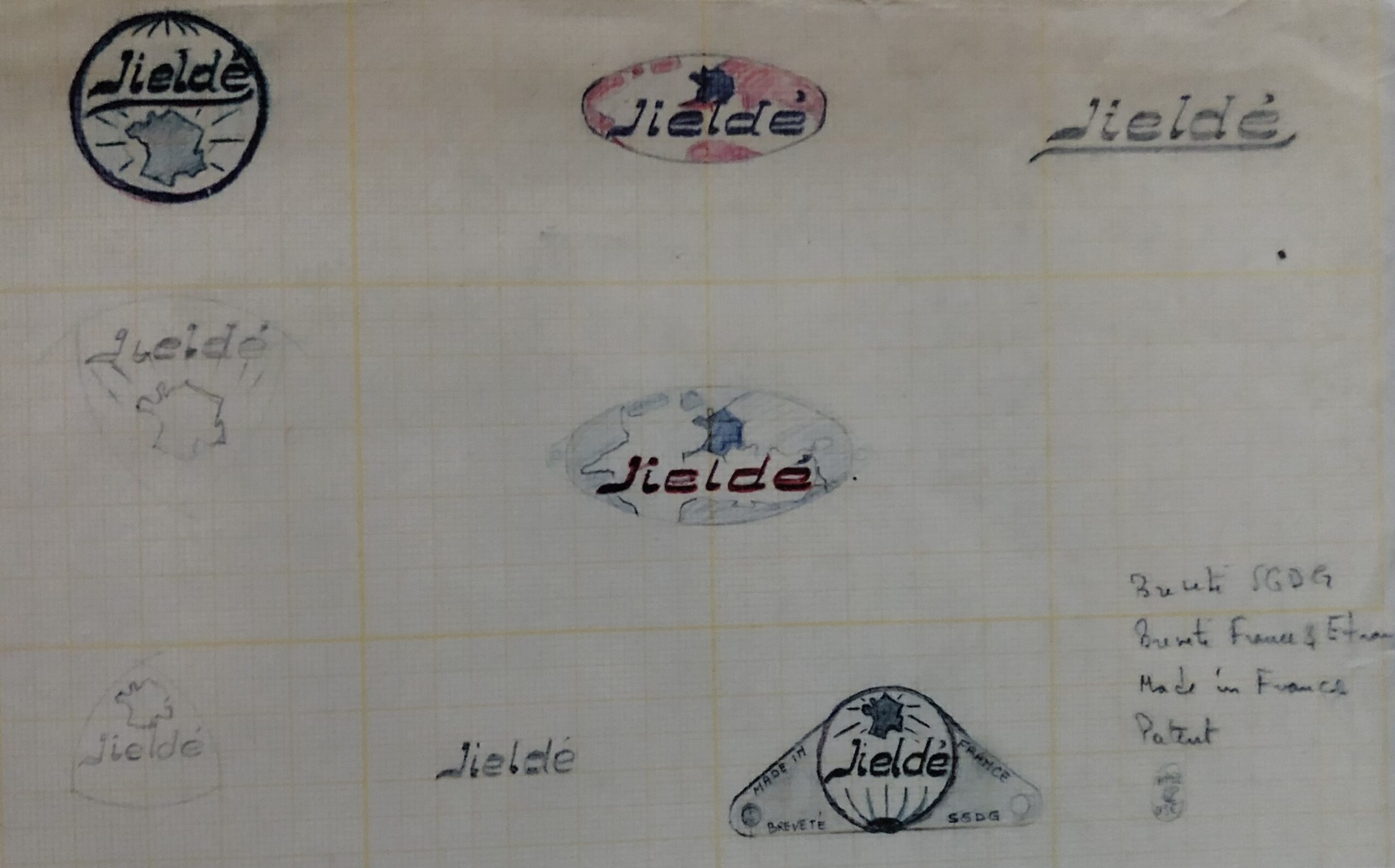
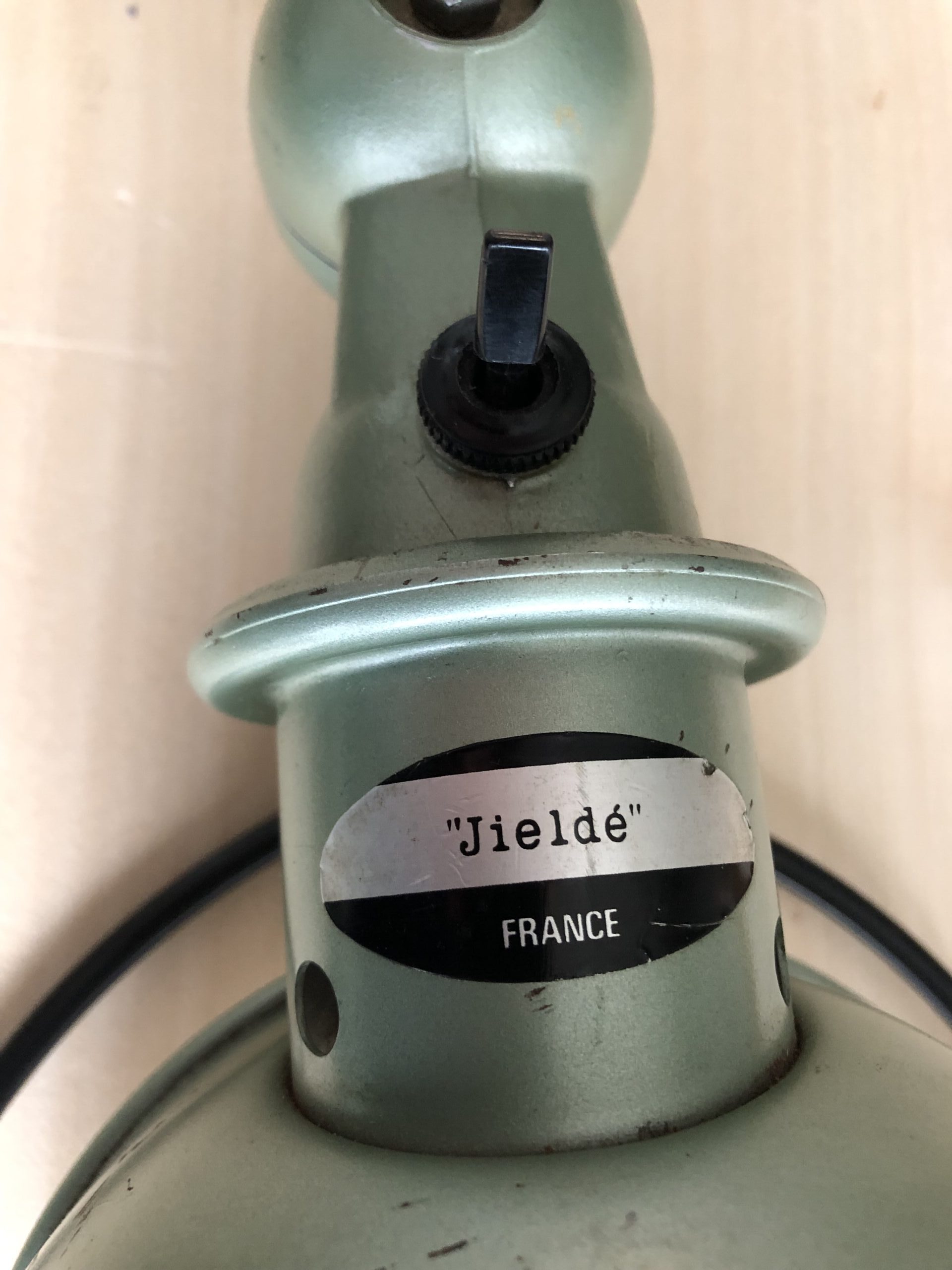
The very first sketch designs of the label. A number of variants also emerged later. The most famous and most widely used is the label with France in the logo.
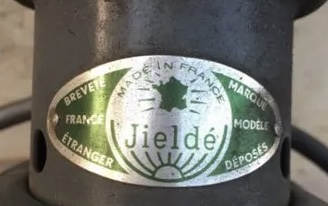
Jieldé lamps from 1950
One of the most important characteristics we look at to determine the age of a Jieldé lamp is the label.
The first lamps have an aluminum label in green, blue, and black. These aluminum plates from 1950 are riveted, and thus from the early years starting in 1950.

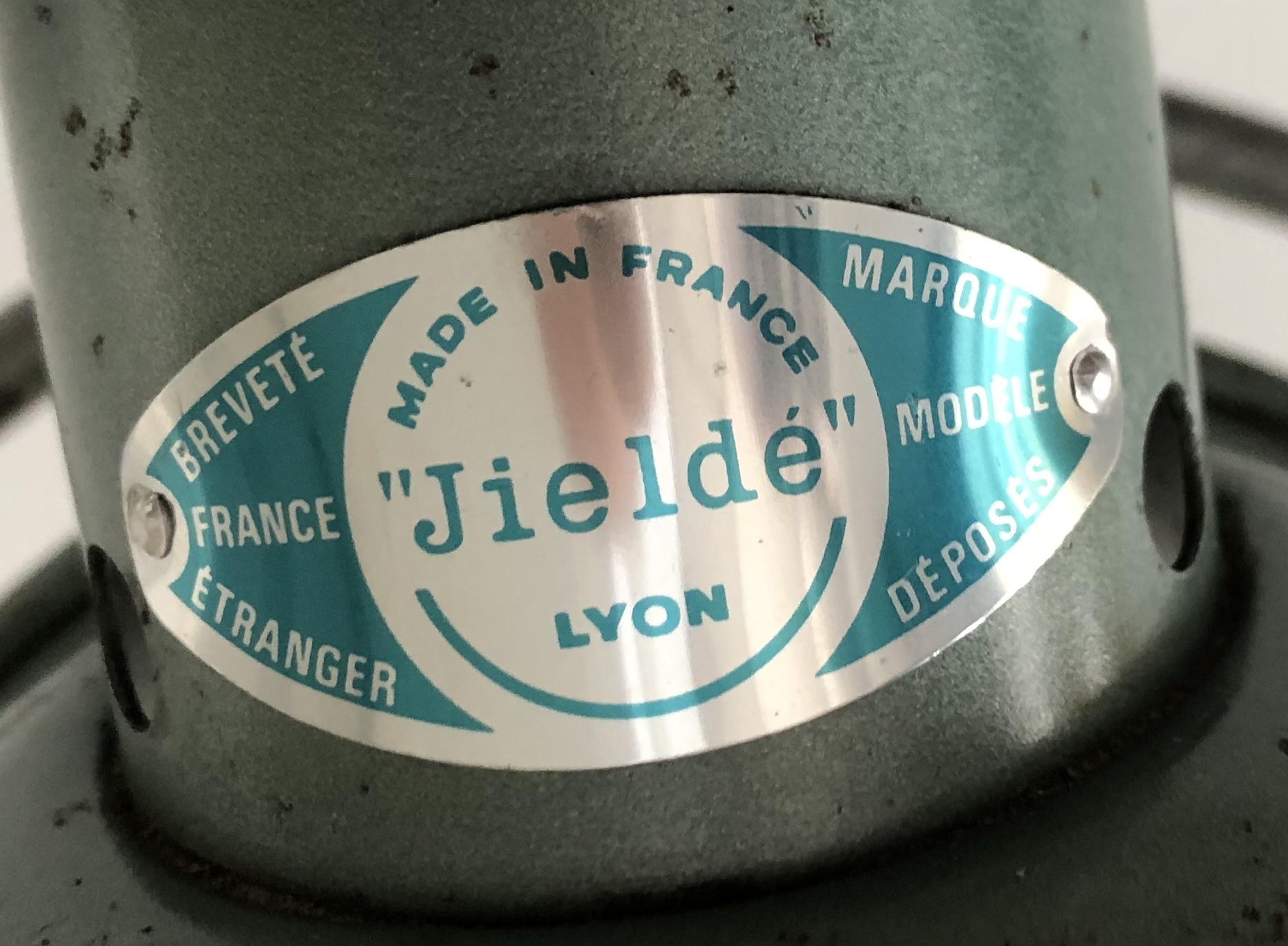
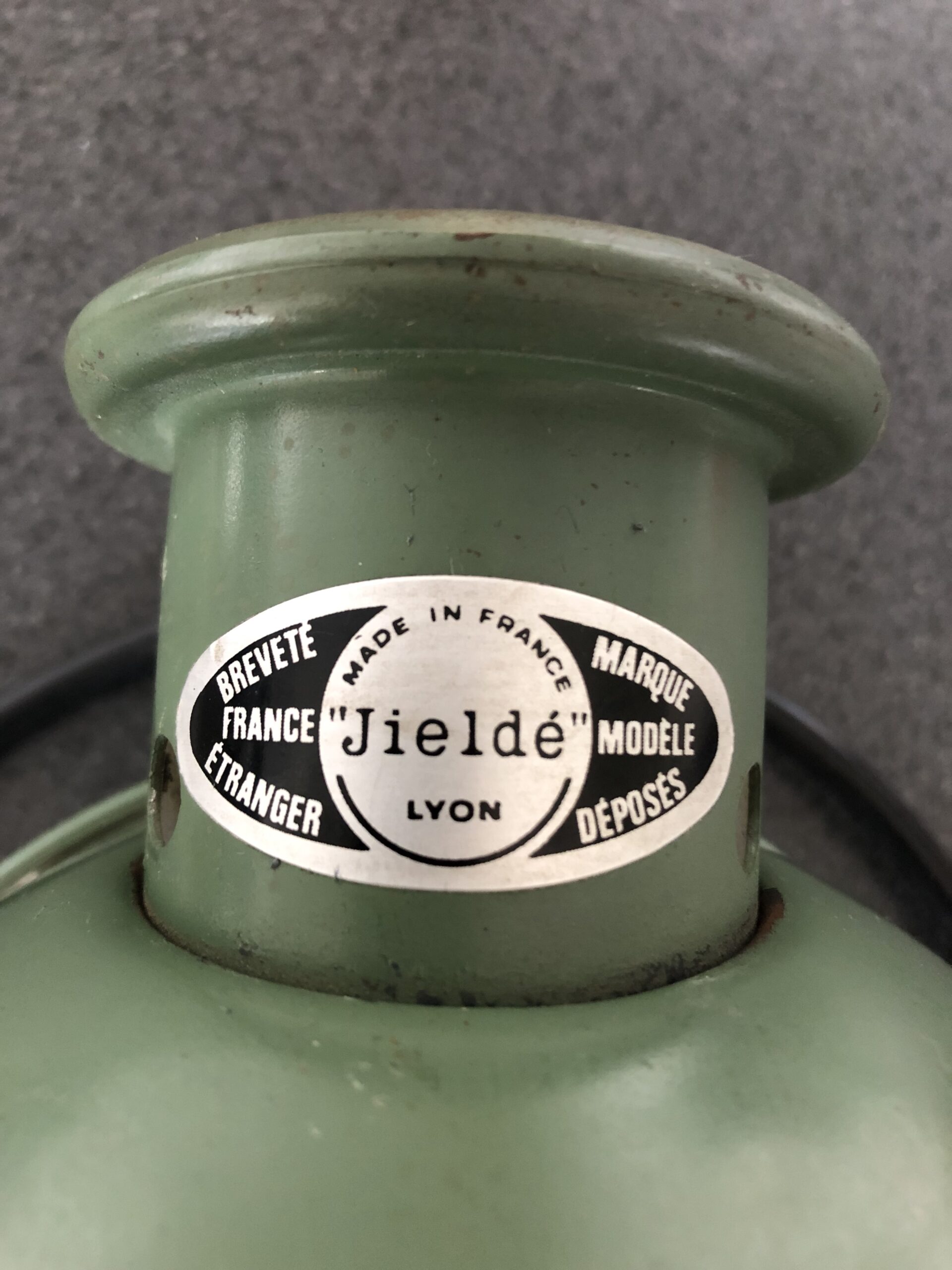
Jieldé lamps from 1980 onward
Later dated Jieldé lamps, from 1980-1986, had a black sticker and were simply designed. These lamps also do not have a metal switch, but one made of black plastic.

Jieldé lamps as they are made today
As of 2000, modern Jieldé lamps have a label with a number, only that, unfortunately, says nothing of the dating of the lamps. The numbers are just batch numbers in the production process.


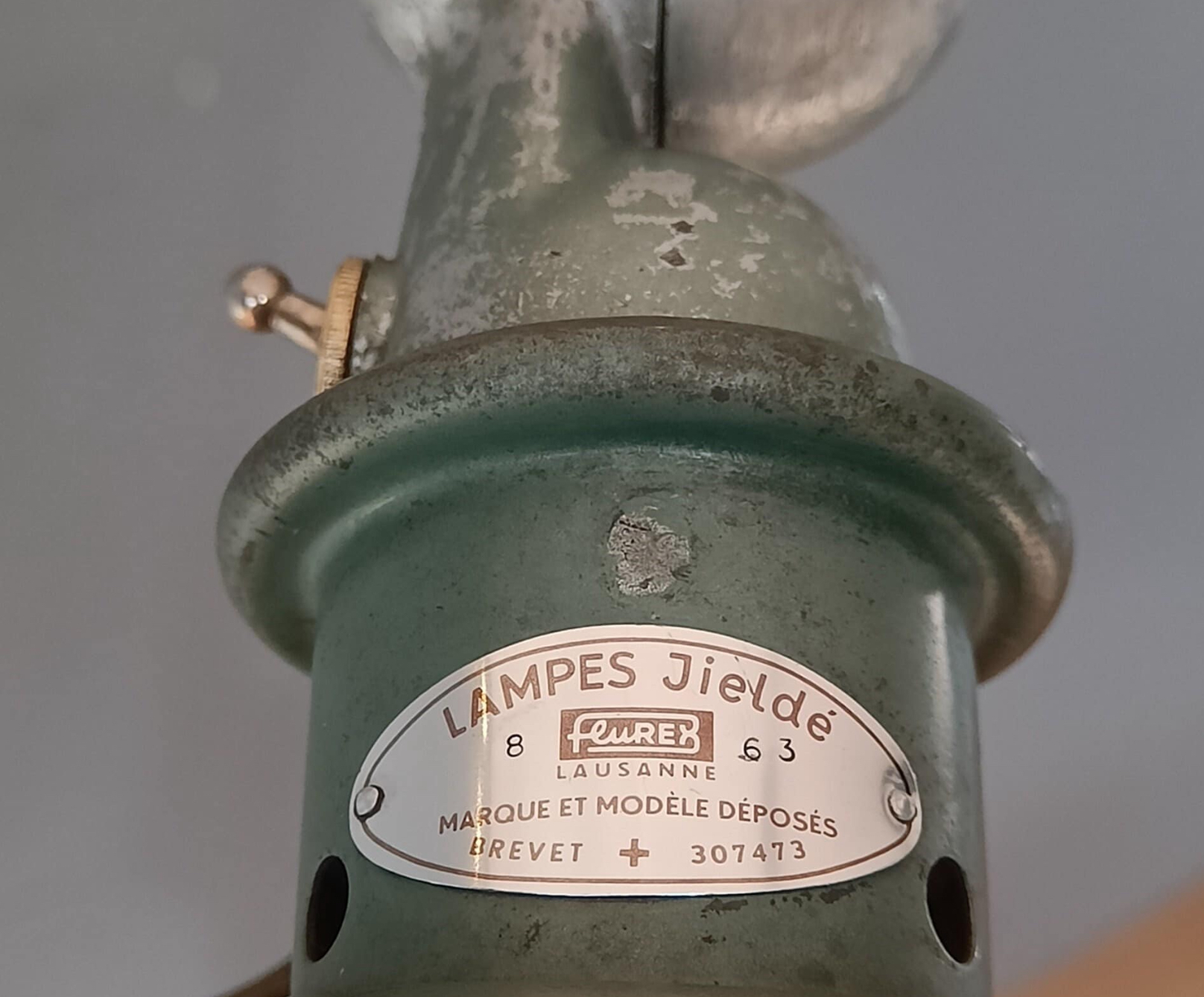
Jieldé lamps made abroad
There are also foreign versions of the Jieldé lamps, fairly rare and special. We know of two, a British version made for British Central Electrical Co. Ltd. (source: vintricity.com).
And a Swiss version the Flurex. This one is also fairly rare and unique. The label shows the month and year of production (date de fabrication), very useful to date the lamp exactly.
The Jieldé Signal lamp
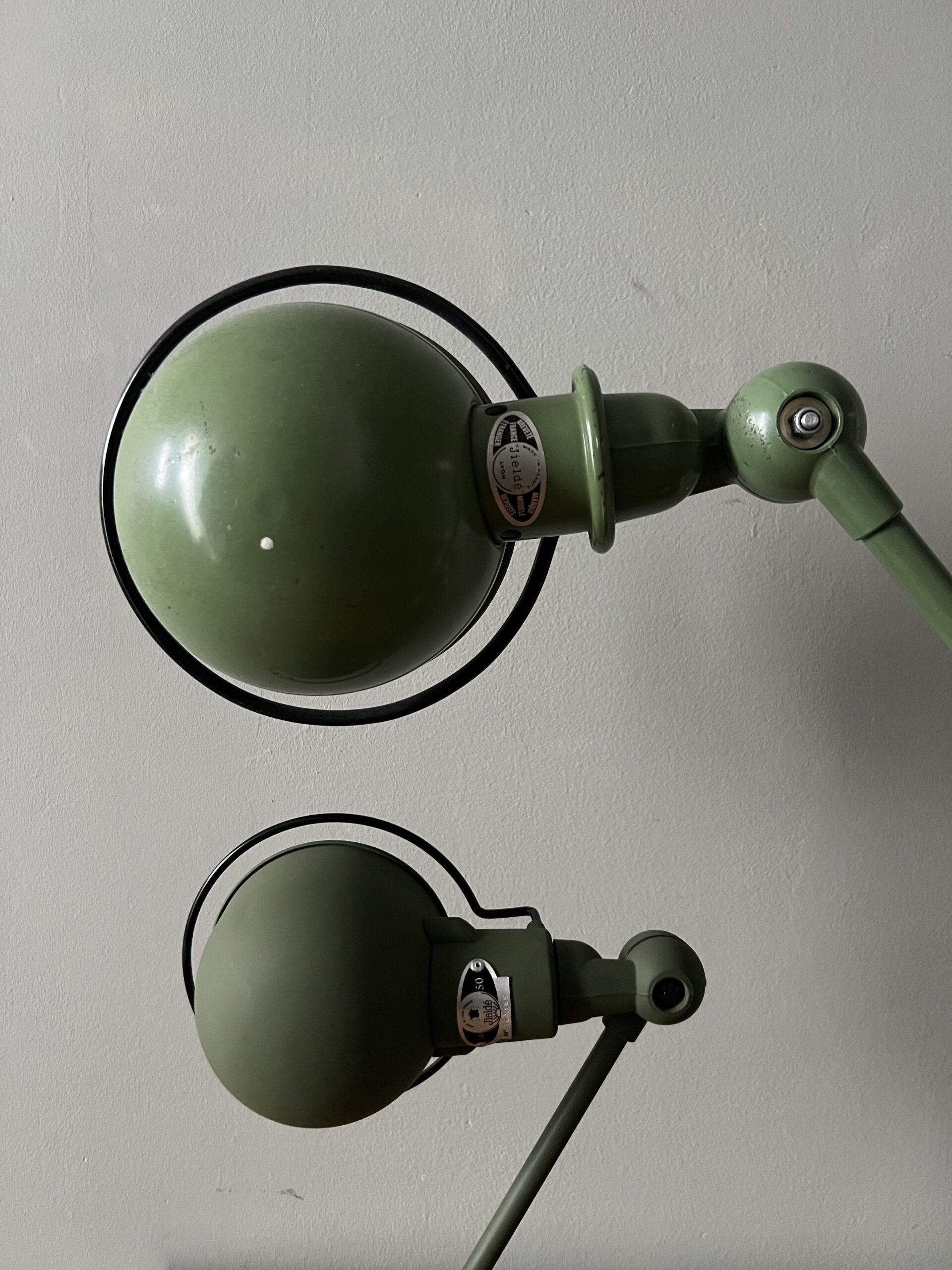
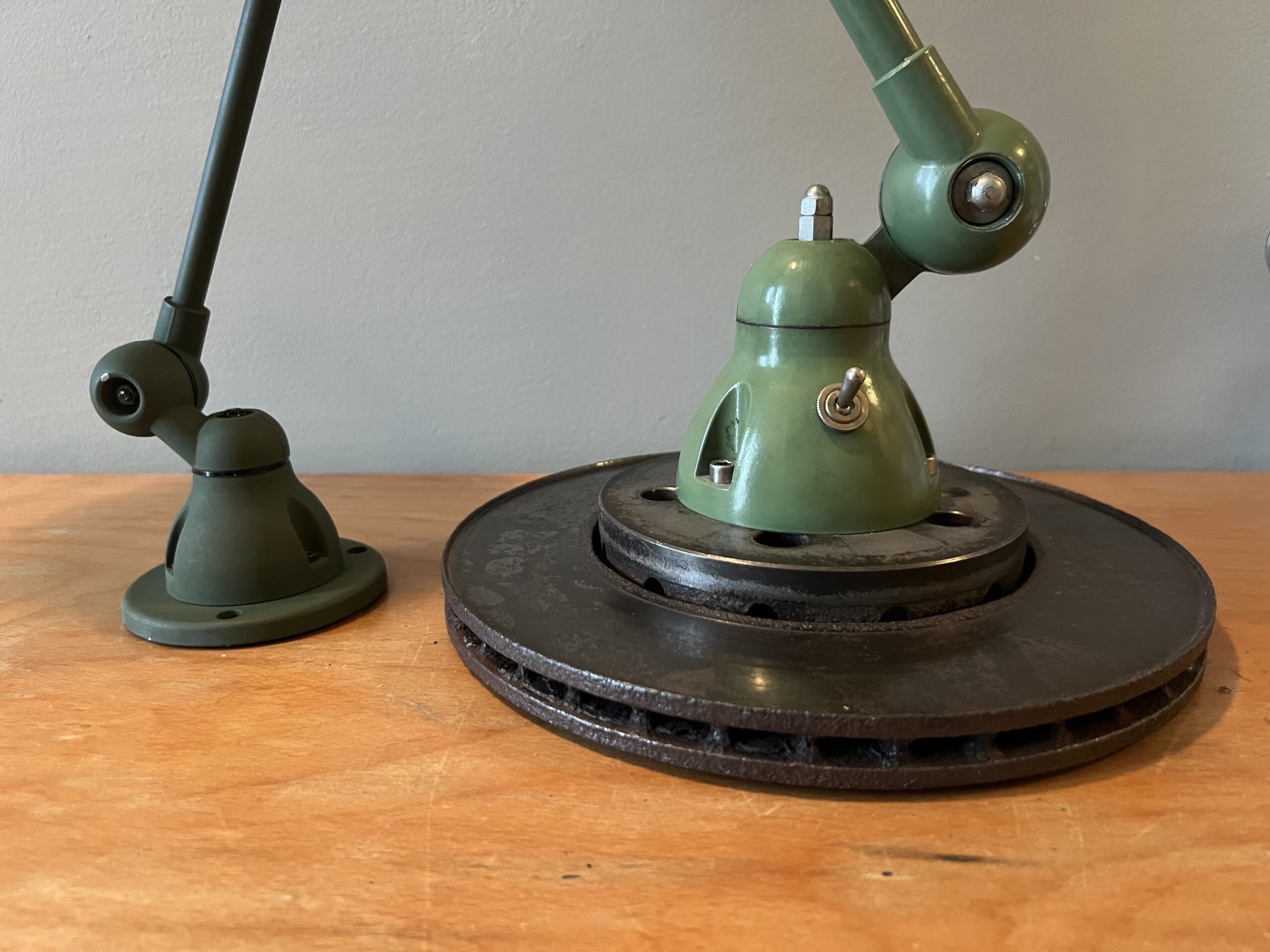
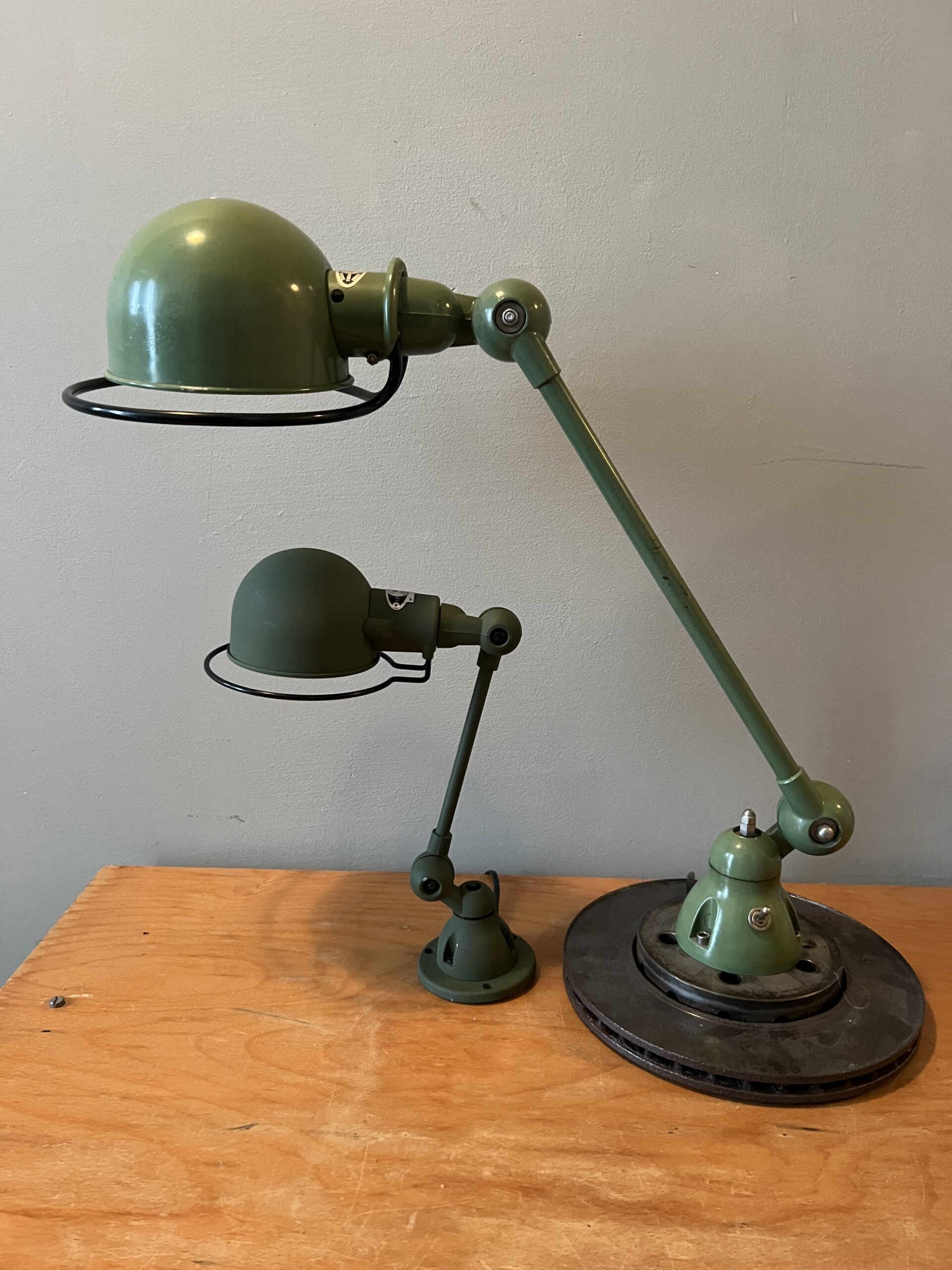
In 2003, a replica of the Loft lamp was created, named the Signal. This lamp resembles the Loft but is smaller. The images alongside clearly show the difference. The Loft has a reflector with a diameter of 16 cm, while the Signal has a 10 cm reflector. The arms are also smaller and shorter. The Signal is clearly designed for interiors, unlike the Loft, which was originally intended as a workshop lamp.
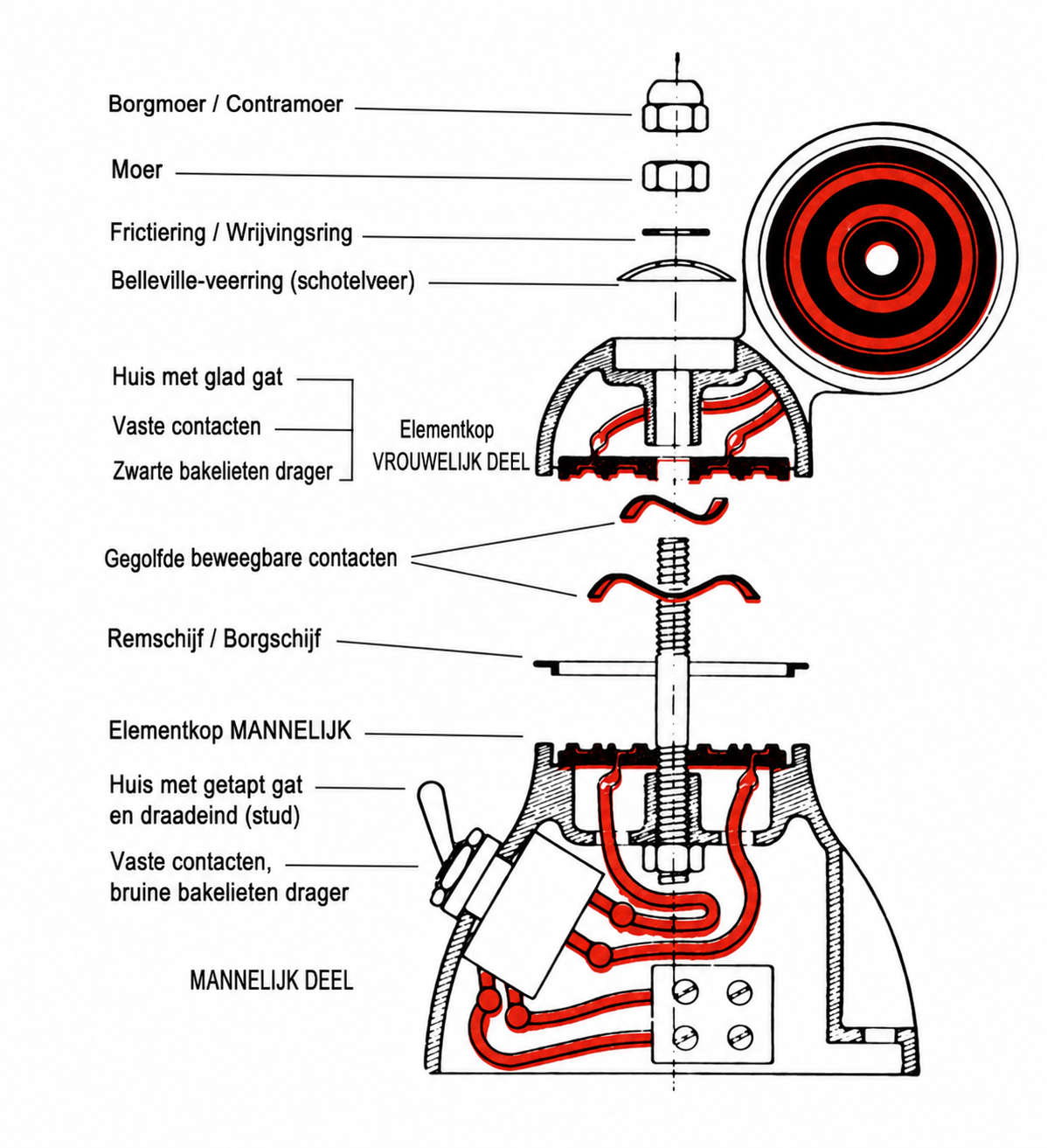
Technical cross-section drawing of the Cone Base and the Elbow.

Technical detail drawing of the connection between two arms and how power is transferred by means of the two copper corrugated rings.
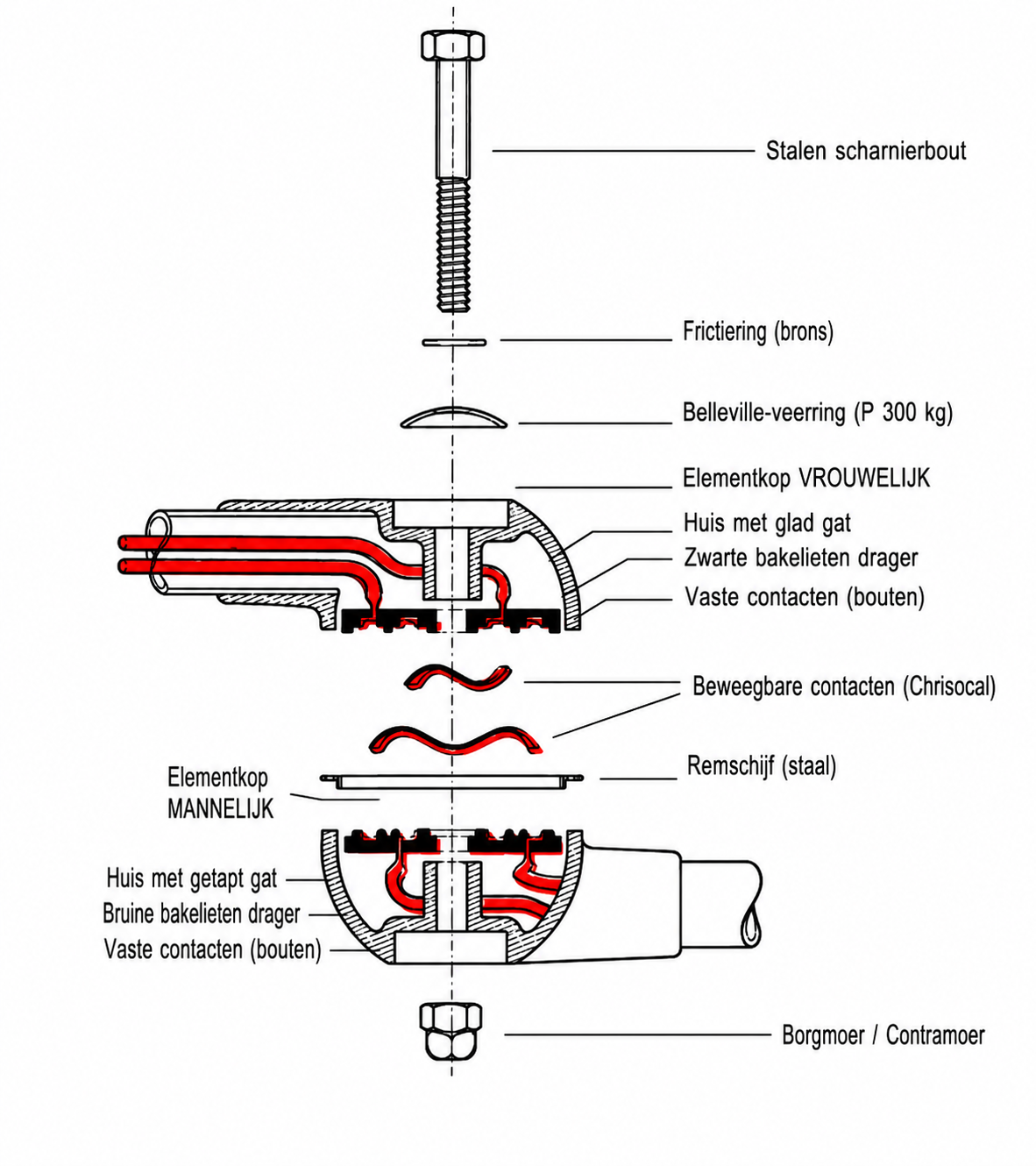
Technical cross-section drawing of the connection between two arms and how the bolt/nut creates the connection. When changing the position of the arms, it is convenient to loosen the bolt slightly and then re-secure it.
